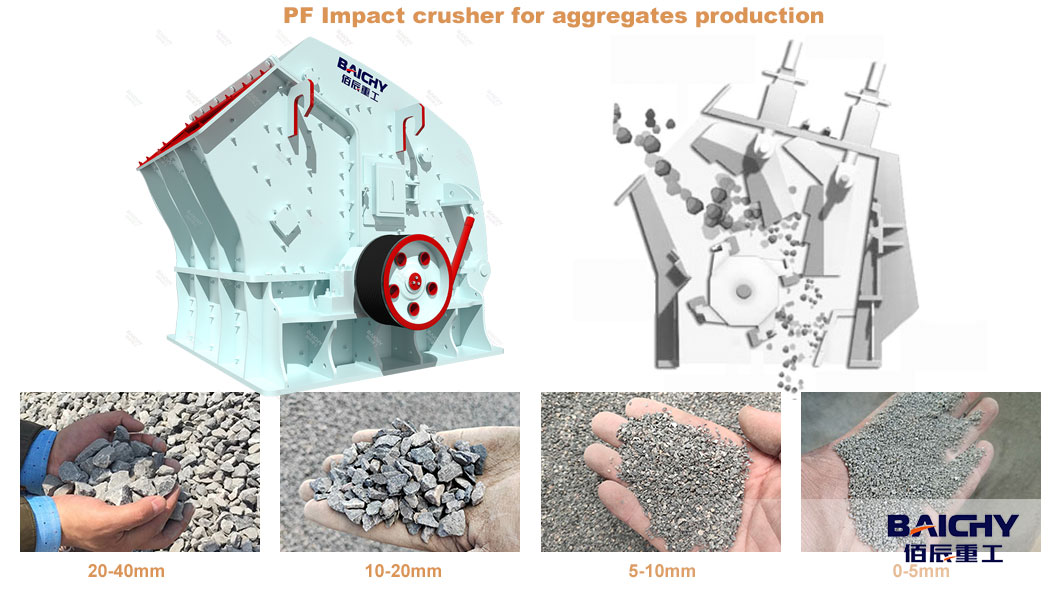
A horizontal shaft impactor (HSI) is a type of impact crusher that breaks rock or other materials through high-speed impact rather than compression. Unlike jaw or cone crushers that squeeze material between two surfaces, HSI crushers use a fast-spinning rotor with blow bars to hurl material against impact plates inside the crushing chamber .
The key distinction: HSI crushers feature a horizontally oriented rotor that propels material against stationary breaker plates. This dynamic impact method delivers high reduction ratios—often 10:1 to 20:1 in a single pass—and produces a cubical product shape preferred for concrete and asphalt applications
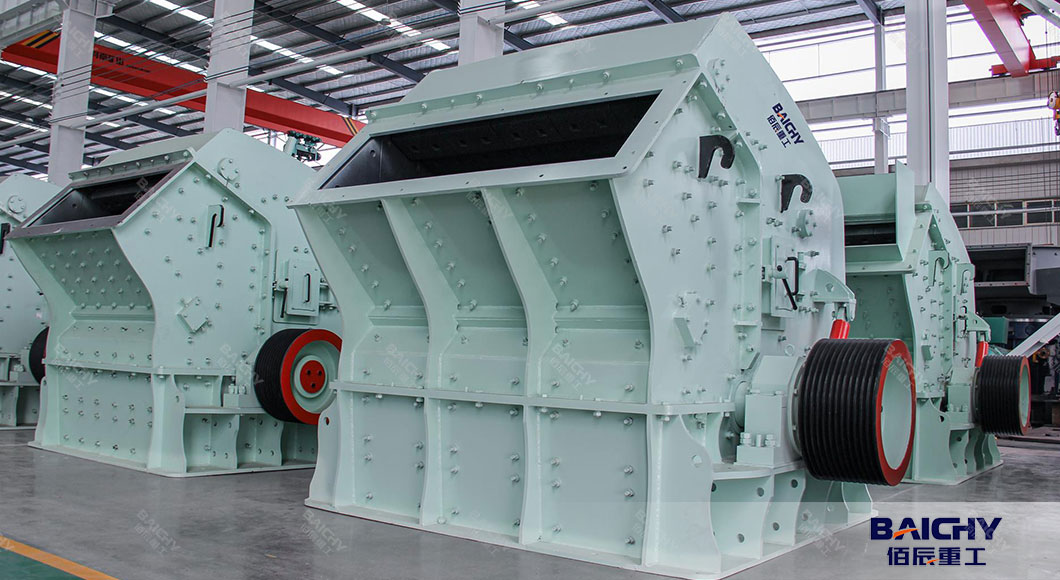
Working Principle of HSI Crusher
The crushing process follows a clear sequence :
1. Material enters the crusher from the top or side
2. A high-speed rotor with blow bars (wear-resistant metal bars) strikes the material
3. The material is thrown against breaker plates (impact curtains) inside the housing
4. Rock shatters on impact, then may hit the rotor and curtains multiple times
5. Material passes through the apron plate gap into secondary chambers for further reduction
6. The final product exits through the bottom once it reaches the desired size
The process uses three-stage crushing: primary impact, secondary impact against aprons, and re-crushing as material bounces back into the rotor path. No screens or grates hold material inside—material exits when it’s small enough to pass through the chamber gaps
Why Choose HSI for 200 TPH Over Jaw or Cone Crushers?
| Feature |
HSI Crusher |
Jaw/Cone Crusher |
| Crushing method |
Impact (high-speed collision) |
Compression (squeezing) |
| Product shape |
, ideal for concrete/asphalt |
More slabby or flat particles -10 |
| Reduction ratio |
Up to 30:1 in single pass -10 |
Lower, may need multiple stages |
| Best for |
Soft to medium-hard materials (limestone, concrete, asphalt) |
Harder, abrasive materials |
| Feed size capability |
Typically up to 600 mm for 200 TPH models -1 |
Often larger |
HSI crushers excel when you need high reduction ratios and well-shaped, cubical product for road base, asphalt mixes, and concrete aggregates. They break down friable material efficiently and remove soft or flaky particles
Technical Specifications for 200 TPH HSI Crusher
A 200 TPH capacity HSI crusher typically comes with the following specifications. Here’s a real-world example from a leading manufacturer:
| Parameter |
Specification |
| Capacity |
200 tph (220 stph) -1 |
| Max. feed size |
600 mm (24 in.) -1 |
| Motor power |
185 kW (250 hp) -1 |
| CSS range |
30.0 – 200.0 mm (1.2 – 7.9 in.) -1 |
| Weight |
~11,005 kg (25,262 lb) -1 |
| Dimensions |
2.84 m (L) × 2.00 m (W) × 2.79 m (H) |
These parameters indicate that a 200 TPH HSI crusher can accept feed up to 600 mm—about the size of a large boulder—and produce output ranging from fine aggregates to larger stone. The CSS range shows the flexibility to adjust output from 30 mm to 200 mm depending on project requirements .
Key Components & Design Features
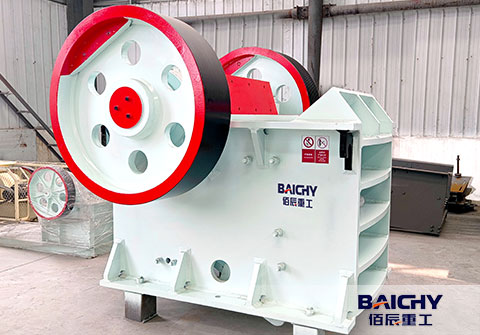
1. Heavy-Duty Rotor Design: The rotor is the heart of the HSI crusher. For 200 TPH models, rotors feature multiple rows of blow bars (typically 4 or more rows on larger rotors) . A heavier rotor provides greater inertia, meaning more crushing force and better performance with harder materials.
2. Hydraulic Adjustment Systems: Modern HSI crushers include hydraulic or mechanical systems to adjust the gap between blow bars and impact plates. This allows operators to change product size without stopping production. Hydraulic adjustments are particularly valuable for maintaining consistent output as wear parts degrade .
3. Overload Protection: Advanced models incorporate tramp iron protection—when uncrushable objects (like rebar or rock bolts) enter the chamber, the impact plate automatically rebounds to allow the object to pass, preventing costly damage .
4. Triple Impact Plate Structure: Many 200 TPH HSI crushers use three counter-attack plates, increasing the number of impact events per pass and improving reduction efficiency while reducing wear on individual components .
5. Wear Parts: Critical wear components include blow bars (typically high-chromium alloy or manganese steel), breaker aprons, and liners. The specific metallurgy should be selected based on material abrasiveness—softer materials like limestone allow for higher-chromium bars, while harder materials may require manganese blends.
Main Applications for 200 TPH HSI Crushers
Ideal Materials: HSI crushers are most effective on materials with compressive strength up to 360 MPa. The 200 TPH capacity makes them ideal for:
● Limestone: The most common HSI application—produces excellent cubical aggregate
● Concrete & Construction Waste: Effective for recycling applications, turning demolition debris into reusable aggregate
● Granite (softer varieties) and andesite
● Asphalt and Reinforced Concrete: HSI can process asphalt without clogging
● Gypsum, Phosphate, Weathered Shales: Traditional HSI materials
Note: HSI crushers are not recommended for highly abrasive materials like hard granite or quartzite, as wear parts would require frequent replacement. For such materials, consider cone crushers instead.
Common Project Scenarios
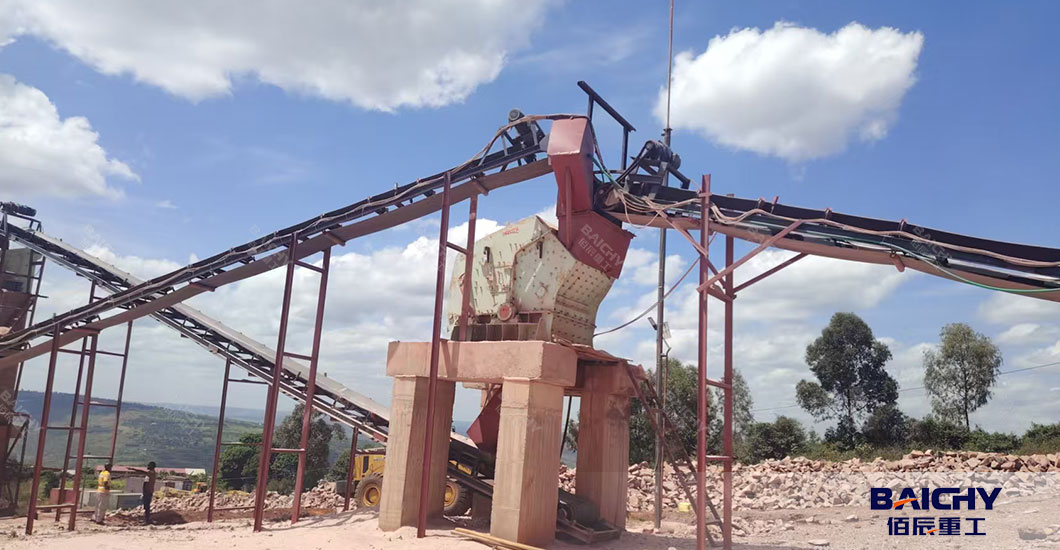
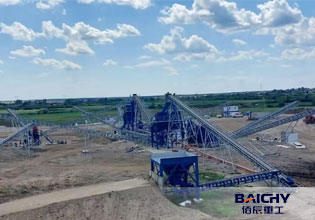
1. Mid-Size Quarry Operations: A 200 TPH HSI crusher serves as either primary or secondary crushing equipment in limestone quarries. It can handle run-of-quarry material up to 600 mm and produce multiple aggregate sizes in one pass. For a quarry producing 1,000–1,500 tons per day, this capacity is well-matched.
2. Construction & Demolition Recycling: HSI crushers are widely used at construction and demolition recycling sites to process concrete and asphalt rubble . The 200 TPH capacity handles typical urban recycling plant throughput. A crawler-mounted mobile version is available for sites with limited space—the tracked chassis allows the crusher to move between job sites and work in confined areas without crane setup .
3. Manufactured Sand Production: When combined with a VSI (Vertical Shaft Impactor), an HSI crusher at 200 TPH can feed a sand-making circuit. HSI produces a cubical intermediate product that VSI refines into manufactured sand for concrete .
4. Road Construction Projects: For highway or infrastructure projects requiring consistent aggregate specs, a 200 TPH HSI crusher can produce base course material, sub-base, and concrete aggregates on-site or in a dedicated plant.
How to Choose the Right 200 TPH HSI Crusher
Key Factors to Consider Before Purchase
● Material Characteristics
○ Hardness: Check compressive strength (MPa). Soft to medium-hard materials (<200 MPa) are ideal. Harder materials increase wear costs significantly .
○ Moisture Content: HSI crushers handle higher moisture without clogging because they lack bottom screens. This is a key advantage over some other crusher types .
○ Abrasiveness: High-silica materials cause rapid wear. Consider total cost of ownership—wear parts replacement costs may offset any initial price savings.
● Output Requirements
○ Product size: Determine whether you need fine aggregate (<10 mm), coarse aggregate (10-40 mm), or base course material.
○ Gradation: Cubical product shape is a major HSI strength, especially for concrete and asphalt specifications .
● Installation Configuration
○ Stationary vs. Mobile: Fixed plants offer lower upfront costs and simpler operation. Mobile (tracked or wheeled) units provide flexibility for multiple sites but cost more .
○ Power availability: Confirm motor power requirement (typically 160-250 kW for 200 TPH) matches your site power supply .
Total Cost of Ownership
● Initial price: 200 TPH HSI crushers typically range from $45,000 to $60,000 for Chinese-made units, with Western or Japanese brands costing significantly more . Some models may reach $100,000+ for premium configurations .
● Operating costs: Factor in energy consumption, wear parts replacement (blow bars, aprons), and maintenance frequency.
● After-sales support: Availability of spare parts and technical support in your region is critical.
The HSI Stone Impact Crusher 200 TPH is a powerhouse for operators looking to balance high output with low operational costs. By selecting the right model—like the PF1315—and focusing on high-quality wear parts, you can ensure a profitable and efficient production line.Want to get a customized quote for your specific material? Our application engineers can help you select the right 200 TPH HSI crusher for your unique requirements. Contact us to discuss your crushing plant layout and material specs.
Frequently Asked Questions About 200 TPH HSI Crushers
Q: What is the maximum feed size for a 200 TPH HSI crusher?
A: Typically around 600 mm (24 inches), though some models may accept up to 800 mm depending on the rotor size and design .
Q: How is product size adjusted?
A: Product size can be changed by adjusting the gap between the blow bars and impact aprons (hydraulically or mechanically), changing rotor speed, or adjusting the apron settings. Some models allow adjustment without stopping the crusher .
Q: What is the difference between PF and HD series impact crushers?
A: PF (Primary/Standard) series typically offers traditional designs for general applications. HD (Heavy-Duty) series features heavier rotors, improved bearing arrangements, and enhanced wear protection—suitable for more demanding applications requiring longer wear life.
Q: Is a 200 TPH HSI crusher suitable for hard rock like granite?
A: It depends on the specific granite composition. While HSI crushers can process some granites, highly abrasive or very hard granites cause rapid wear and may be better handled by cone crushers. Always test your material or consult the manufacturer.
Q: What is the expected lifespan of wear parts?
A: Blow bars typically last 50-150 hours in abrasive applications or 500+ hours in soft limestone. The exact lifespan depends on material hardness, moisture, and feed consistency. High-chromium alloy bars offer longer life for abrasive feeds .




 2026-10-16





 86-15093113821
 86-15093113821