When it comes to road construction, the quality of your aggregate directly dictates the durability of the final pavement. Andesite, a dense and tough volcanic rock, is highly favored for highway base layers and asphalt production due to its excellent load-bearing capacity. However, turning massive, raw andesite boulders into perfectly sized construction gravel requires the right mechanical setup.
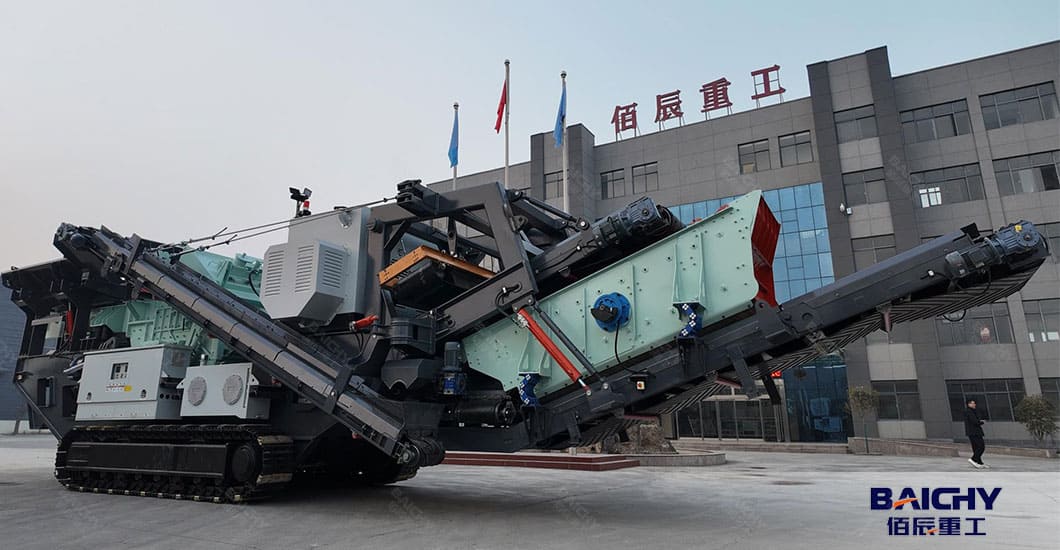
If your project requires taking a 500 mm raw andesite input and reducing it to a 23 mm high-quality output, the Mobile Impact Crusher is one of the best machines for the job. But should you use a single-stage or a double-stage crushing design? Let’s break down the technical details, equipment choices, and a real-world success story from Indonesia.
Why Choose a Mobile Impact Crusher for Road Construction?
Road construction projects are rarely stationary. As the highway advances, your equipment needs to move with it. Mobile crushers mounted on heavy-duty crawler tracks or wheeled chassis eliminate the need for expensive concrete foundations and drastic haul-truck costs.
More importantly, Impact Crushers are the undisputed champions of aggregate shaping. Unlike jaw or cone crushers that can produce flat or elongated rocks, impact crushers shatter the stone along its natural fault lines. This violent mid-air striking action produces a beautifully uniform, cubic-shaped aggregate. For road construction, cubic stones interlock perfectly, creating a much stronger and more stable road base.
The Challenge: 500 mm Input to 23 mm Output
Reducing a 500 mm boulder down to a 23 mm final product represents a significant reduction ratio (roughly 22:1). To achieve this specific sizing, your mobile plant must be carefully designed. Here is how you can approach the crushing circuit.
Option 1: Single-Stage Crushing Solution
Can a mobile impact crusher handle 500 mm rocks and output 23 mm gravel all by itself?
● The Design: In a single-stage setup, you would use a heavy-duty Primary Mobile Impact Crusher equipped with an integrated vibrating screen (a closed-circuit system). The 500 mm rocks enter the impactor, get smashed, and pass over the screen. Any rock larger than 23 mm is automatically sent back into the crusher via a return conveyor.
● The Pros: Lower initial investment cost, smaller equipment footprint, and quick setup.
● The Cons (The Andesite Factor): Andesite has a medium-to-high hardness and can contain abrasive silica. Forcing a single impact crusher to do all the heavy lifting from 500mm to 23mm will cause the internal steel blow bars to wear out extremely fast. This will lead to high daily maintenance costs and frequent downtime.
Option 2: Double-Stage Crushing Solution (Highly Recommended)
For a hard volcanic rock like andesite, a double-stage crushing circuit is the professional standard.
● The Design: This setup utilizes two mobile crusher plants working together.
○ Stage 1: A Mobile Jaw Crusher takes the massive 500 mm boulders and effortlessly squeezes them down to about 100–150 mm.
○ Stage 2: The pre-crushed material is then fed into a Mobile Impact Crusher. Since the rocks are already small, the impactor simply focuses on shaping the stone and bringing it down to the final 23 mm size.
● The Pros: Massive production capacity, drastically reduced wear and tear on the impactor’s blow bars, and uninterrupted workflow.
● The Cons: Higher initial purchase price because you are buying two separate mobile machines. However, the savings in wear parts and the massive boost in daily output quickly pay for the second machine.
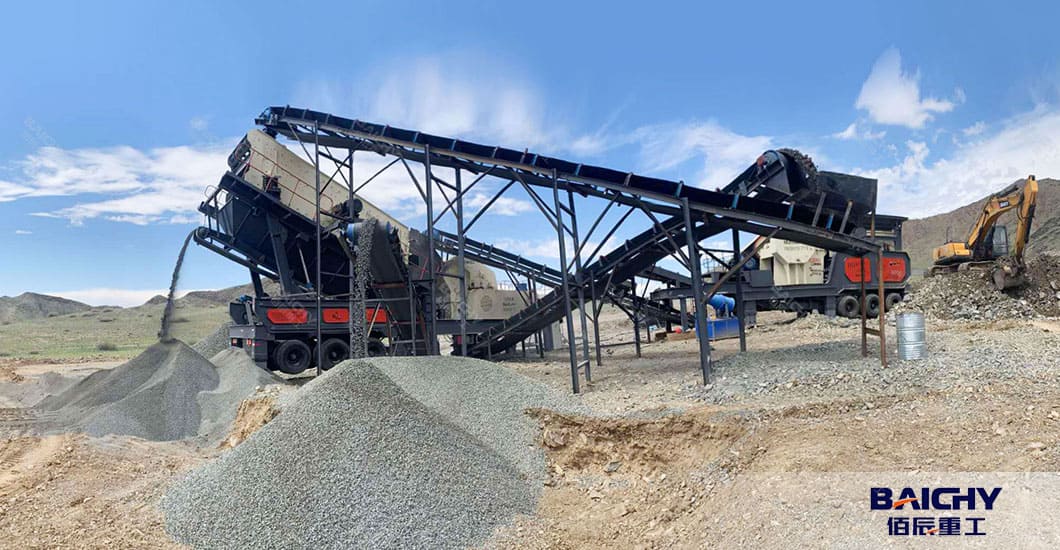
Real-World Case Study: Andesite Highway Project in Indonesia
Location: West Java, Indonesia
Material: High-hardness Andesite Rock
Project Goal: Produce <23 mm cubic aggregate for a major toll road expansion.
Input Size: Up to 500 mm blasted rock.
The Problem:
An Indonesian construction contractor initially attempted to use an older, stationary jaw crusher, but the hauling costs from the quarry to the distant road site were destroying their profit margins. Furthermore, the jaw crusher alone produced flaky, jagged rocks that failed the strict quality inspections for the highway asphalt mix.
The Solution:
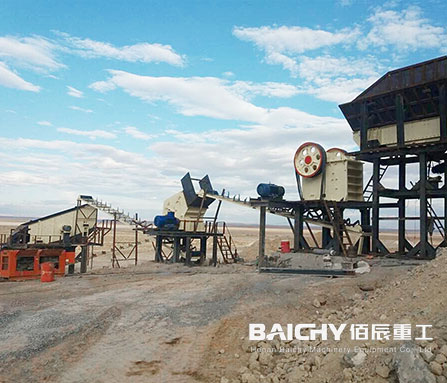
Our engineering team designed a customized Double-Stage Mobile Crushing Plant tailored for their specific site conditions:
Primary Plant: A Track-Mounted Mobile Jaw Crusher easily swallowed the 500 mm andesite blocks, reducing them to 120 mm.
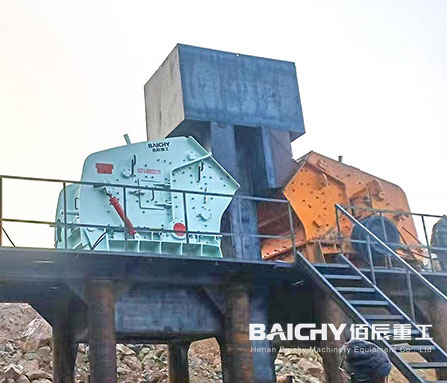
Secondary Plant: A Track-Mounted Mobile Impact Crusher with an integrated vibrating screen followed immediately behind. It took the 120 mm rocks and struck them into perfectly cubic gravel. The built-in screen ensured that 100% of the final discharged product was exactly 23 mm or smaller.
The Results:
By bringing the mobile crushers directly to the excavation site, the contractor eliminated the need for a fleet of transport trucks. The double-stage design easily handled the abrasive andesite, keeping blow-bar replacement costs surprisingly low. Most importantly, the impact crusher produced premium, perfectly shaped 23 mm aggregates that easily passed the government's strict road construction standards, allowing the toll road project to be completed ahead of schedule.
When crushing abrasive rocks like andesite, matching your input and output requirements with the right mechanical setup is critical. Whether you need a highly compact single-stage primary impactor for soft rock or a heavy-duty double-stage mobile jaw and impactor circuit for hard volcanic stone, we have the exact machinery you need. Contact our expert engineering team today for a free material analysis, and let us design a mobile crushing solution that maximizes your production and your profits!




 2026-09-21





 86-15093113821
 86-15093113821