Double-shaft vibrating screens are core screening equipment in the mining, building materials, sand and gravel aggregate, and coal industries. They generate vibration force through two synchronously and oppositely rotating eccentric shafts, driving the screen box to perform linear or near-linear reciprocating vibration, achieving material classification and impurity removal. Due to their strong vibration force, high screening efficiency, and stable operation, they are widely used in large-scale screening of medium and coarse-grained materials and are also common supporting equipment for crawler-mounted mobile crushing and screening stations.
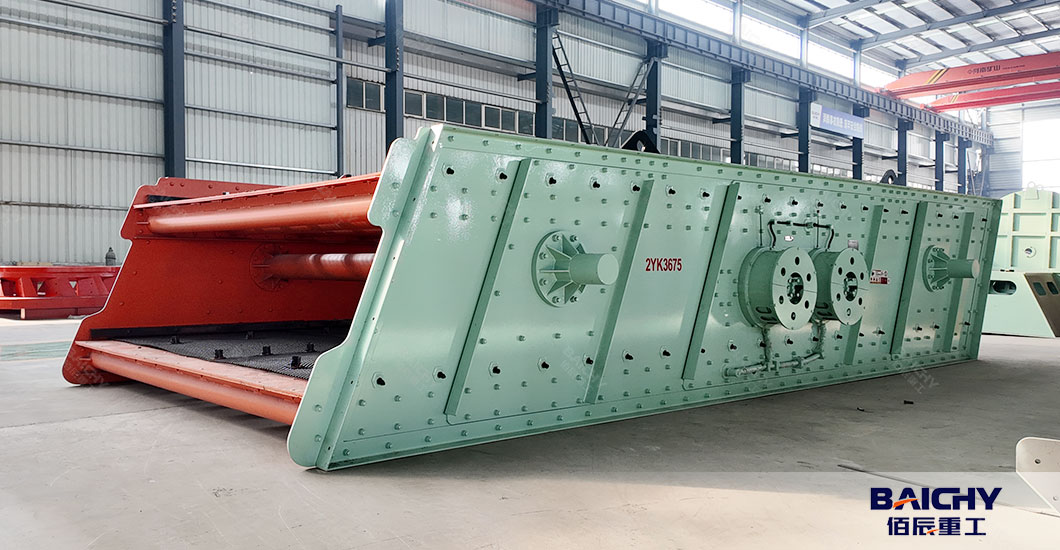
The core design feature is that the horizontal centrifugal forces of the two shafts are offset through synchronous drive, leaving only the effective vibration force in the vertical or along the screen surface direction. This not only reduces the vibration of the foundation during operation but also enables the material to move quickly and evenly in a straight line on the screen surface, significantly improving the material's penetration rate and avoiding clogging problems.
I. Working Principle
The power source of the double-shaft vibrating screen is a motor, which drives two parallel eccentric shafts through a coupling and pulley. Under the meshing action of the synchronous gears, the two eccentric shafts always rotate at the same speed but in opposite directions.
During rotation, the centrifugal forces generated by the eccentric blocks of the two eccentric shafts cancel each other out in the horizontal direction and superimpose in the vertical or along the screen surface direction, forming a directional compound vibration force. This vibration force drives the screen box and screen to perform high-frequency linear reciprocating vibration. After entering the screen surface from the feed port, the material moves forward quickly under the vibration effect and is classified according to particle size: fine materials smaller than the screen holes penetrate the screen and fall into the receiving hopper, while coarse materials larger than the screen holes are discharged from the discharge port along the screen surface, achieving the separation of materials of different specifications.
II. Main Structural Components
The double-shaft vibrating screen has a high degree of modularization, with few core components and convenient maintenance. It mainly consists of the following parts:
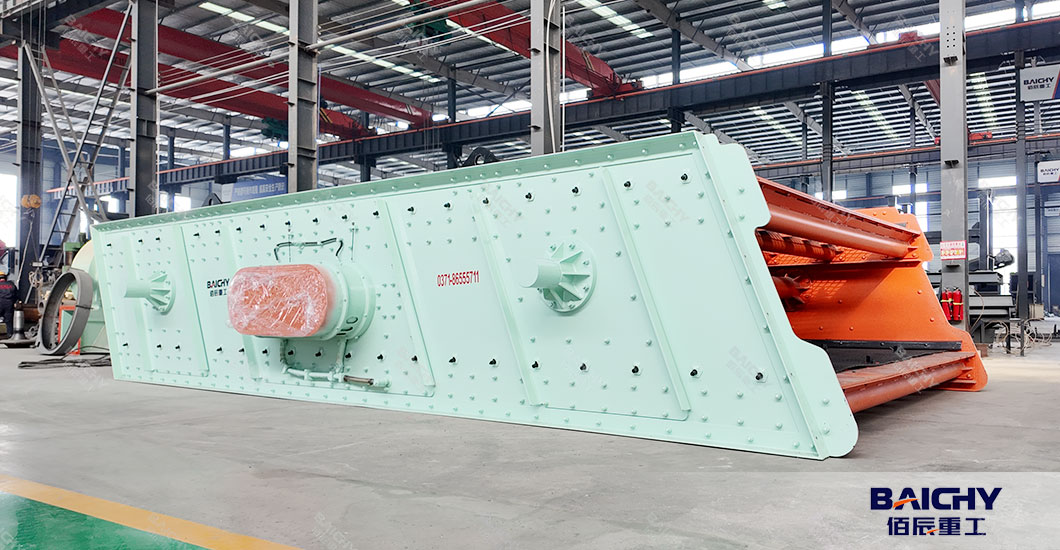
● Screen box: A rigid frame composed of side plates, crossbeams, and screen frames, which is the main body for carrying the screen and material. It is made of steel plates welded and bolted together, with high strength and good vibration resistance, suitable for harsh mining conditions.
● Double exciter: The core power component, consisting of two eccentric shafts, eccentric blocks, synchronous gears, and bearing seats. The weight and angle of the eccentric blocks can be adjusted to change the vibration force and amplitude, adapting to the screening requirements of different materials.
● Screen: The key to directly achieving material classification. Common types include perforated screen plates, woven screens, and polyurethane screens. They can be selected based on material hardness and particle size (such as polyurethane screens for sand and gravel aggregates, which are wear-resistant and clog-resistant; woven screens for coal, with high penetration rate). Multi-layer screen arrangements are supported to complete 2-4 levels of material classification in one operation.
● Elastic support: Composed of springs and support seats, installed between the screen box and the foundation. Its function is to buffer the vibration of the screen box, reduce the transmission of vibration to the foundation, lower the operating noise, and ensure the vibration stroke of the screen box.
● Drive unit: Includes a motor, coupling, pulley/reducer, providing power to the exciter. Motors are often explosion-proof and dust-proof, suitable for mining and open-pit operation scenarios.
● Feed/discharge devices: The feed hopper prevents material splashing, and the discharge ports are set according to the classification specifications to ensure the separate collection of materials of different particle sizes. Some models are equipped with baffle plates and anti-clogging net structures.
III. Performance Characteristics
Compared with single-shaft vibrating screens and circular vibrating screens, the design of double-shaft vibrating screens is particularly suitable for large-scale industrial screening needs, with significant advantages:
● High screening efficiency: The linear vibration trajectory ensures that the material does not slide in a circular motion on the screen surface, spreads quickly and penetrates thoroughly, with a screen surface utilization rate of over 80%, and a low clogging rate. It is especially suitable for the screening of wet and sticky, medium and coarse-grained materials.
● Adjustable vibration force: By adding or reducing the weight of the eccentric blocks and adjusting the angle of the eccentric blocks, the vibration amplitude and vibration force can be flexibly changed to adapt to materials of different hardness and particle sizes (such as limestone, granite, coal, construction waste).
● Stable operation and low noise: The dual-axis reverse rotation cancels out the horizontal centrifugal force, resulting in minimal base vibration during operation. There is no need for complex heavy-duty foundations, and the installation is convenient. Moreover, the gears and bearings are all sealed, with an operating noise level below 85dB.
● High processing capacity: The linear vibration enables fast material transportation, with a single unit's processing capacity ranging from 100 to 2000t/h. It is suitable for continuous operation in large-scale sand and gravel production lines and mobile crushing stations.
● Robust structure and easy maintenance: With few core components, the screen is fixed with quick-release bolts or pressure strips, making replacement convenient. The exciter is sealed, with a long lubrication cycle, making it suitable for harsh working environments with large amounts of mine dust.
● Strong adaptability: It can be designed as single or multi-layer, fixed or mobile according to requirements. The mobile dual-axis vibrating screen can be directly integrated with crawler or tire-mounted mobile stations to achieve on-site screening immediately after crushing.
Common types and application scenarios
The dual-axis vibrating screen is mainly divided into two types based on installation form and application scenarios, covering all fields such as mining, building materials, coal, and construction waste treatment:
1. Fixed dual-axis vibrating screen
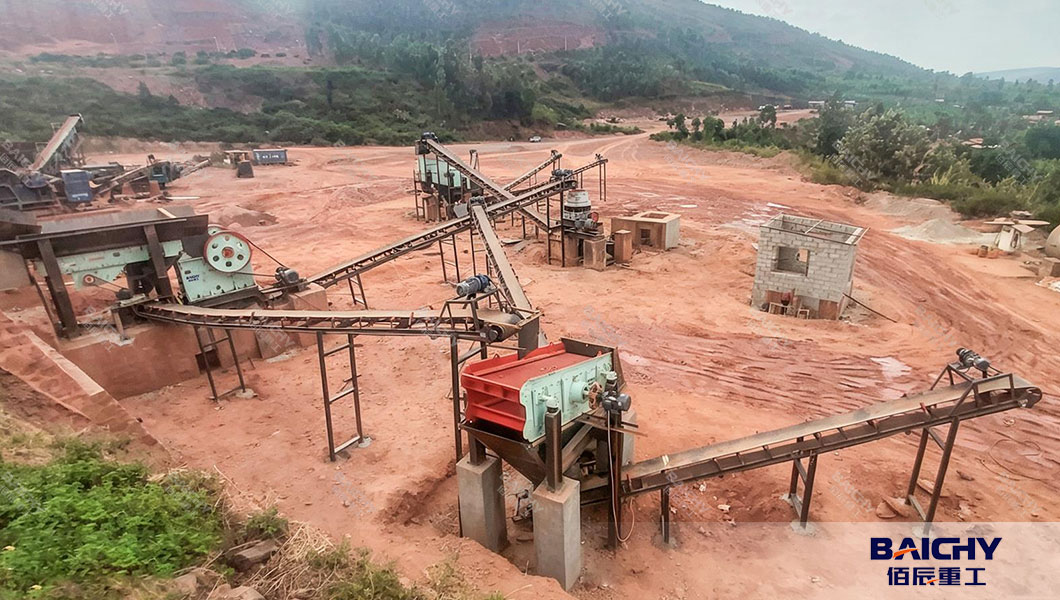
Suitable for large-scale aggregates production plant with fixed sites (such as sand and gravel yards, ore processing plants, and coal washing plants), it can be customized according to the production line's requirements for screen size and number of layers. It has a large processing capacity and high classification accuracy, and is often used for raw material classification and finished product screening.
2. Mobile dual-axis vibrating screen
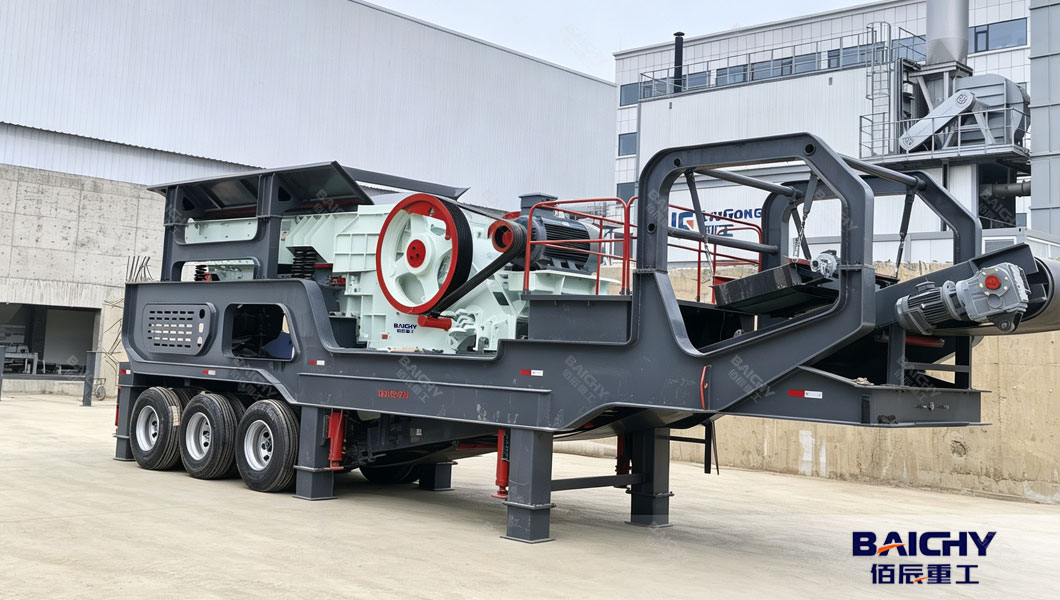
Integrated with crawler or tire-mounted mobile chassis, it is the core component of mobile crushing and screening stations, suitable for on-site construction, construction waste recycling, road construction, and other mobile operation scenarios. It can move with the crushing equipment to achieve on-site screening and reduce material transportation costs.
3. Typical applicable materials
Limestone, granite, basalt, and other sand and gravel aggregates, coal, coke, ore raw materials, construction waste recycled materials, sand and gravel dewatering / desliming, etc.
● Applicable particle size: Suitable for medium and coarse particle size screening, with screen hole sizes generally ranging from 5 to 150mm. It is not suitable for ultra-fine powder materials (such as materials finer than 200 mesh) screening.
Henan Baichy Machinery Equipment Co., Ltd. is a mining machinery manufacturer integrating R&D, production and sales. Stone crusher is one of its core production equipment. It has mature technology and processes, complete models and configurations, and technical engineers can tailor production line configuration plans for you. If you are interested in the stone crusher, please click on the online consultation to get solution and price now. Baichy Machinery is dedicated to serving you 24 hours a day!
People Also Frequently Asked For - FAQ
Q1: What are the advantages of a dual-shaft vibrating screen over a single-shaft one?
A1: The main advantages are higher screening efficiency and larger processing capacity. Its linear vibration ensures more even material distribution and faster particle penetration. It also operates more stably with less impact on the foundation.
Q2: What industries is it mainly used in?
A2: It is suitable for medium- to heavy-duty applications requiring high-volume screening, such as mining (for coal and ores), sand and aggregate plants, construction materials, and metallurgy.
Q3: What should be noted for daily maintenance?
A3: There are three key maintenance points:
Bearing Lubrication: Regularly lubricate as specified in the manual.
Screen Mesh Inspection: Clean blockages promptly and replace worn or damaged mesh.
Fasteners & Springs: Check and tighten bolts, and inspect damping springs for damage.




 2026-09-09





 86-15093113821
 86-15093113821