Home About us
Products
News
Solution
Video Service Contact us
200 TPH Crawler Mobile Crushing Plant in Ethiopia

200 TPH Crawler Mobile Crushing Plant in Ethiopia

Share
Capacity:         
150-250 ton / hour
Output size:     
0-5mm, 5-10mm, 10-20mm, 20-31.5mm
Material:          
Basalt, granite, limestone, quartz, gold ore
Configuration:

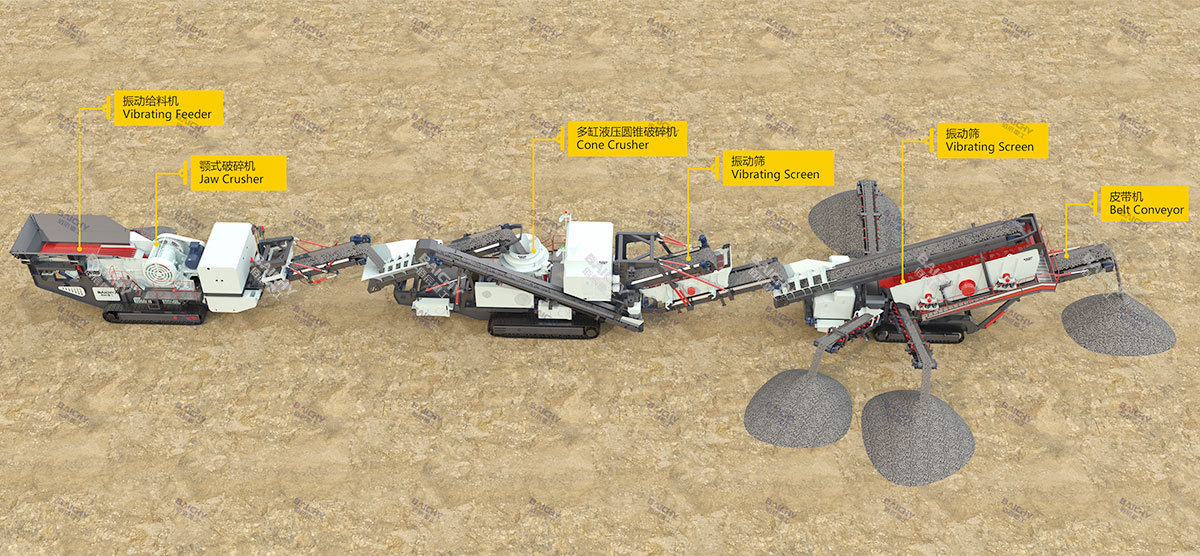
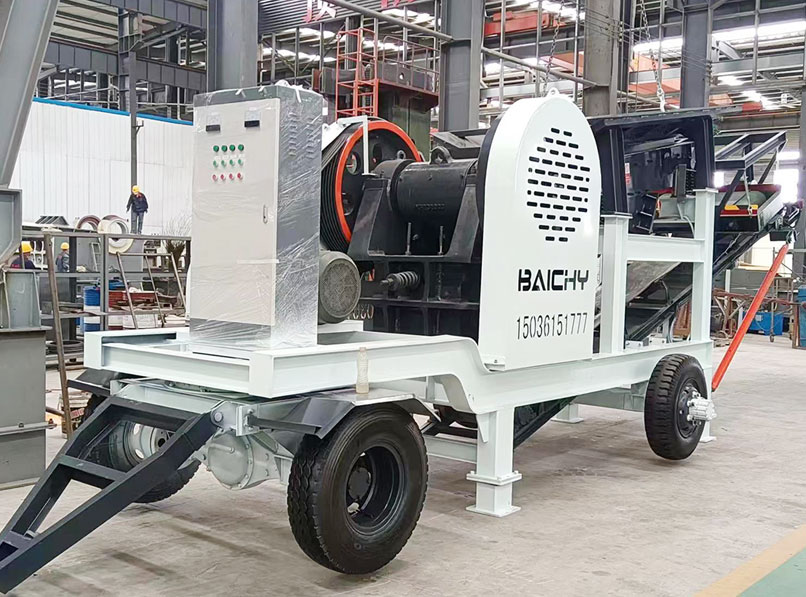
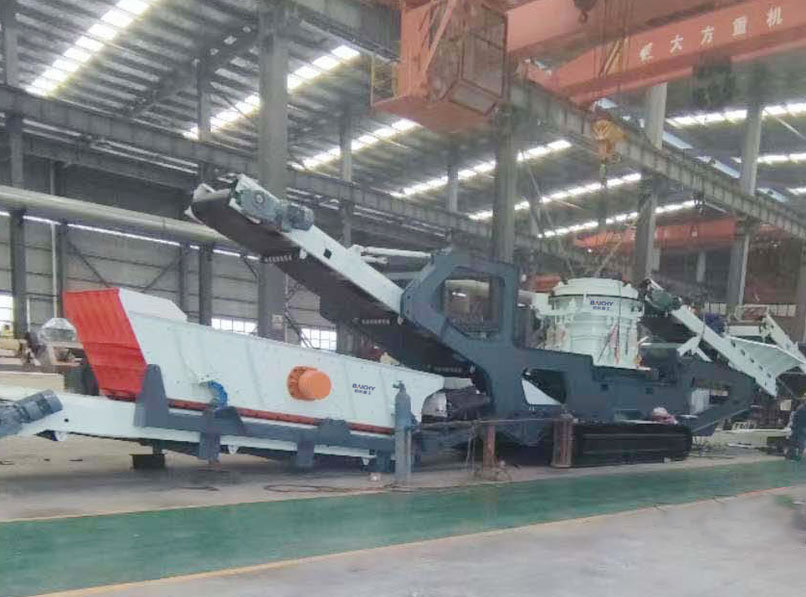
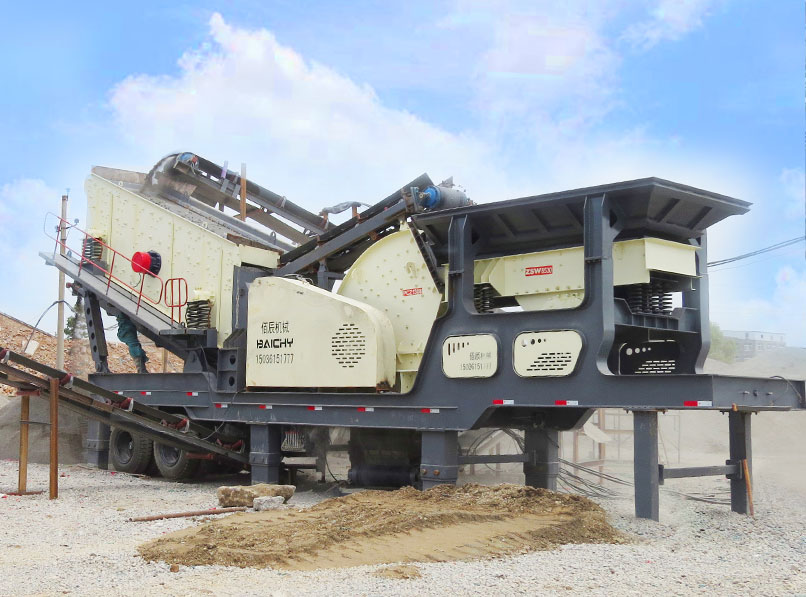
Crawler mobile jaw crusher plant YMC106,  Crawler mobile cone crusher plant YMH30S, Crawler mobile vibrating screen YMS18, Iron remover, Main belt conveyor, side belt conveyor, Diesel - electric drive system

Crawler Mobile Crushing Plant for Basalt Aggregates 200 t/h

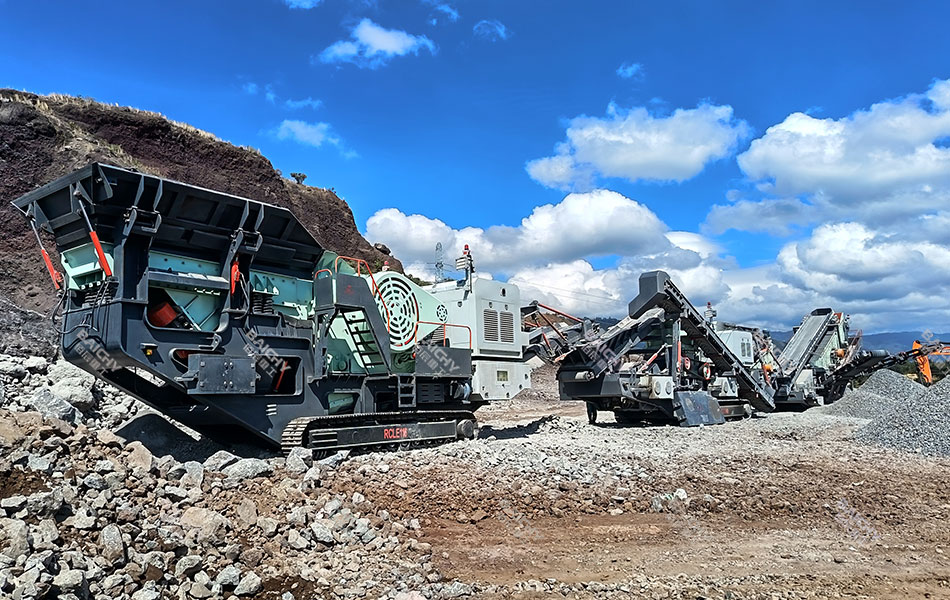
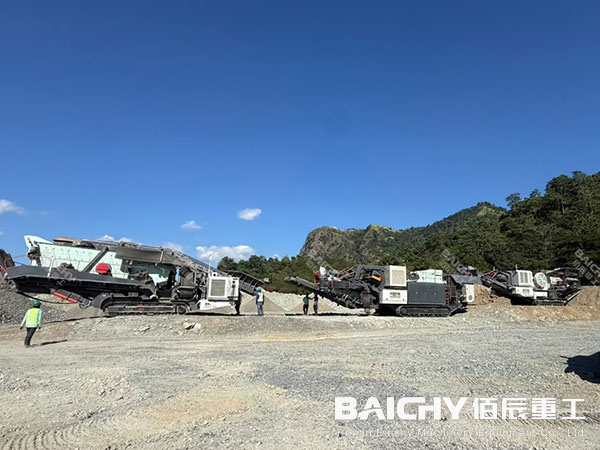
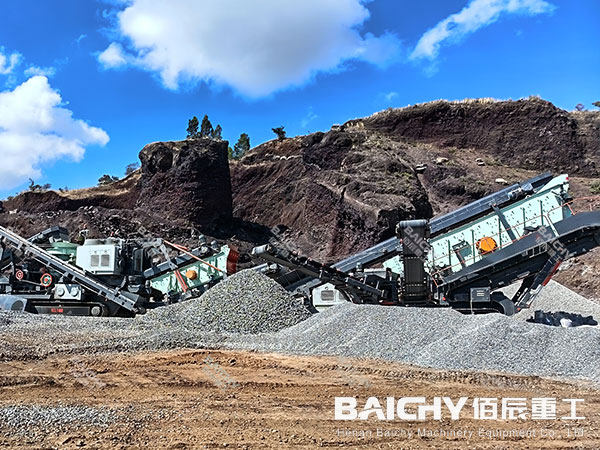
A 200 TPH crawler mobile crushing plant is now in production at a basalt quarry in Ethiopia. Three tracked units — a mobile jaw crusher, a mobile cone crusher and a mobile screening plant — produce four graded aggregates: 0–5, 5–10, 10–20 and 20–31.5 mm. Since commissioning the line has held its rated output, kept gradation inside the customer's specification and run without unscheduled downtime. The customer rates both equipment quality and Baichy's after-sales support highly.  


At beginning, The customer supplies aggregate to concrete batching plants and road contractors. Local demand has moved toward graded, specification-compliant stone — clean 5–20 mm fractions for concrete, stable 20–31.5 mm for road base, plus manufactured fines. The quarry works a basalt deposit: hard, dense, high in silica, and one of the more demanding feeds a crushing circuit can see. The project presented several distinct challenges:

  ●  Hard and abrasive feed material: Basalt causes accelerated wear on crushing chambers and liners, requiring a configuration that balances productivity with manageable wear-part costs .

  ● Demand for multiple product sizes: The client needed to produce four standardized aggregate fractions from a single production line to serve different construction applications.

  ● Remote support: Unstable grid power, dry-season dust and long distance from any manufacturer's service base had to be solved before shipment, not after.

  ● Site mobility and rapid deployment: The quarry operating model required equipment that could be relocated without extensive civil works or prolonged installation downtime.

Baichy’s crawler-mounted mobile crushing and screening plant was selected to address these requirements, combining mobility with a proven compression-crushing circuit suited to hard rock.

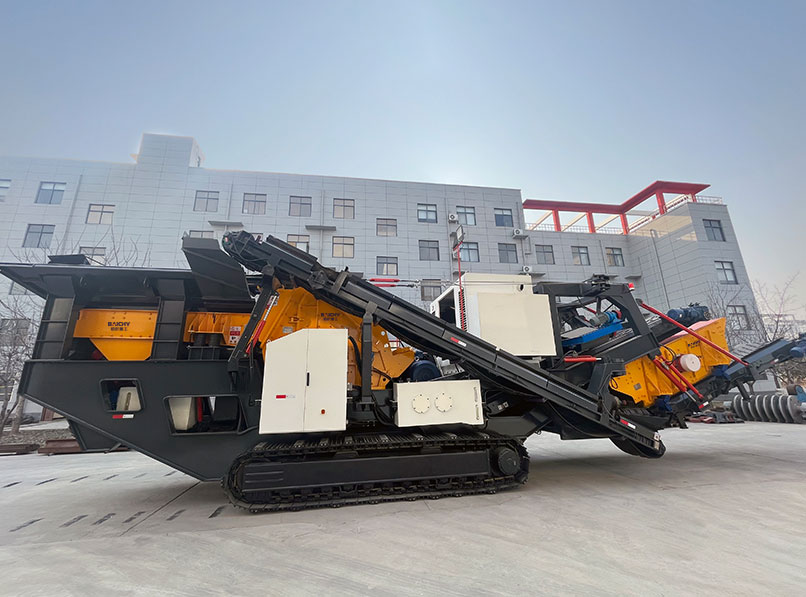
crawler mobile crushing and screening plant

Configuration: Three Tracked Units, One Continuous Line

Baichy specified a compression-crushing circuit — the only sound principle for hard, abrasive rock.

Unit Model Role Key parameters
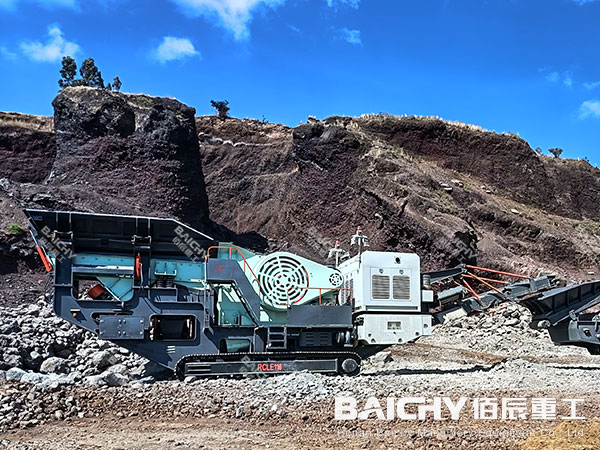
Crawler jaw crusher plant YMC106 Primary crushing at the face C106 jaw, 132 kW; feeder with pre-screen; accepts 0–600 mm; hydraulic CSS
Crawler cone crusher YMH30S Secondary crushing, closed circuit HP300 cone; integrated 2YK1436 screen; CSS 25–32 mm; oversize returned by belt
Crawler screening plant YMS18T Final grading Cuts at 40 / 20 / 10 / 5 mm; three side belts plus oversize return


Optimized Crushing Circuit
The process begins with a wheel loader feeding the hopper, where a pre-screen efficiently strips fines before the material enters the C106 jaw. Here, 0–600 mm basalt is reduced to 0–200 mm at a 100–120 mm setting. The main belt then transfers the material to an HP300 cone crusher. Utilizing advanced laminar crushing, the cone reduces the rock to 0–40 mm, delivering superior particle shape. The cone plant's integrated inspection screen separates finished product and returns oversize to maintain a choke-fed chamber, maximizing efficiency.


Maintaining Precision Grading
Achieving exact specifications relies on dynamic screening optimization. By adjusting screen amplitude and slope to match feed moisture, we ensure optimal retention time. The circulating load is carefully managed via the return belt, and the cone's CSS is hydraulically fine-tuned to adapt to changing feed hardness. Rigorous quality control is enforced through scheduled sampling of all stockpiles, ensuring every fraction meets strict delivery standards.

Key Advantages of the Baichy Solution

1. Dual Power (Diesel-Electric) Operation for Remote Sites

Baichy’s tracked mobile plant offers seamless switching between diesel and external electric power. In Ethiopia’s off-grid quarry, diesel mode guarantees production, while electric mode cuts costs when available. This dual-power design enables immediate deployment in remote areas and was the key reason for selecting Baichy equipment, ensuring uninterrupted operation regardless of local power infrastructure..

2. Tracked Mobility Eliminates Fixed Infrastructure

All three units are mounted on heavy-duty crawler chassis, allowing independent movement on rugged quarry terrain without trailers or concrete foundations. The plant can be repositioned closer to the active quarry face, reducing raw material haulage distances and associated costs.

3. Compression Crushing Circuit Suited to Basalt

The jaw-plus-cone configuration uses laminar compression crushing, which is well-suited to hard, abrasive rock. Compared with impact-based secondary crushing, this approach offers more predictable wear-part consumption and helps control flakiness in the finished aggregate.

4. Closed-Circuit Production for Yield Control

The return conveyor from the screening plant back to the cone crusher ensures that oversize material is re-crushed rather than stockpiled as waste. This closed-loop arrangement helps maintain consistent finished-product gradation and supports the targeted 200 TPH output of saleable material.

5. Rapid Deployment and Relocation

The tracked design enables production to begin within a short period after arrival on site, without the weeks or months typically required for fixed plant civil works. This is particularly valuable for quarry operations where the working face advances over time.

Customer Feedback

 After commissioning and a period of stable operation, the Ethiopian client provided positive feedback on both equipment performance and Baichy's service support:


"The plant has reached the 200 TPH target consistently. The four aggregate sizes we produce meet the local specifications, and the particle shape is acceptable for our concrete customers. The basalt is hard on wear parts, but the crusher chambers have held up well. Most importantly, the dual power system has been a lifesaver—grid power here is unreliable, but the diesel mode keeps us running, and when power is available we switch to electric and save on fuel. Baichy's engineers were on site for commissioning and training, and their response to our questions after startup has been fast. We are satisfied with both the equipment and the after-sales support."


The client specifically noted that equipment uptime has met expectations, that the dual power capability has eliminated power-related stoppages, and that the mobile configuration allows them to adjust the plant layout as the quarry face advances.

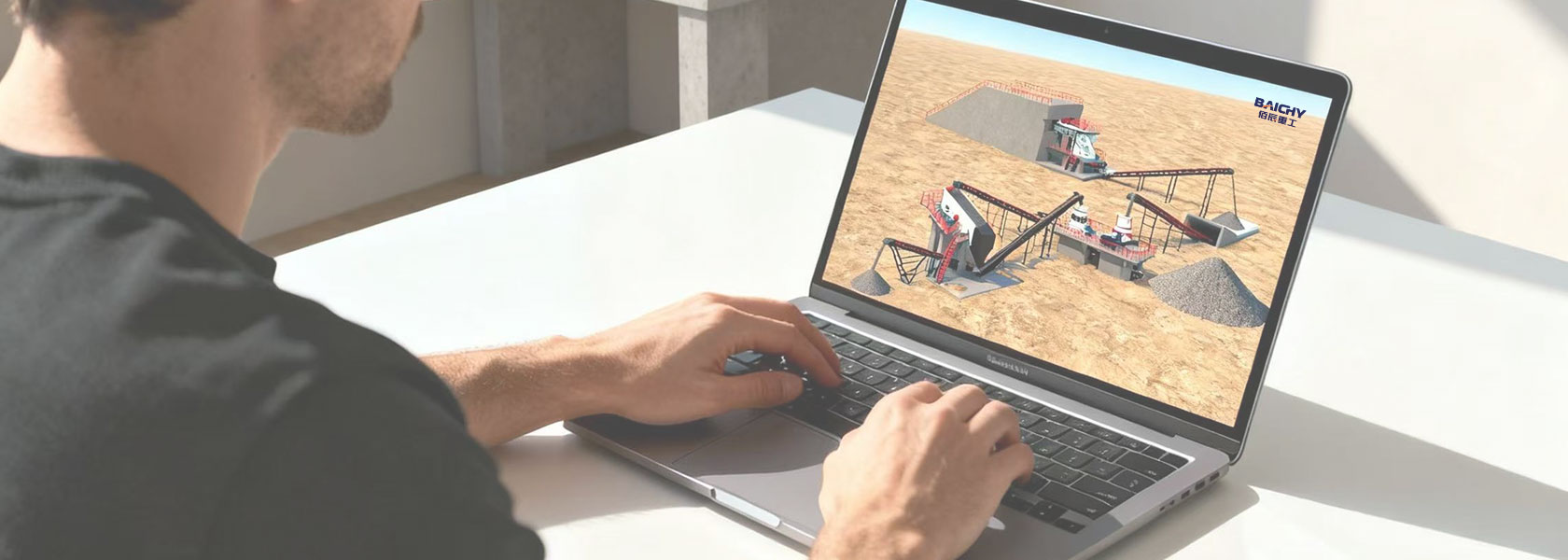
Crushing Solutions Design

Baichy Machinery can customize a crushing plant for you based on the specific conditions of your project: such as the construction site, hardness of the raw materials, output, output size, budget, etc.

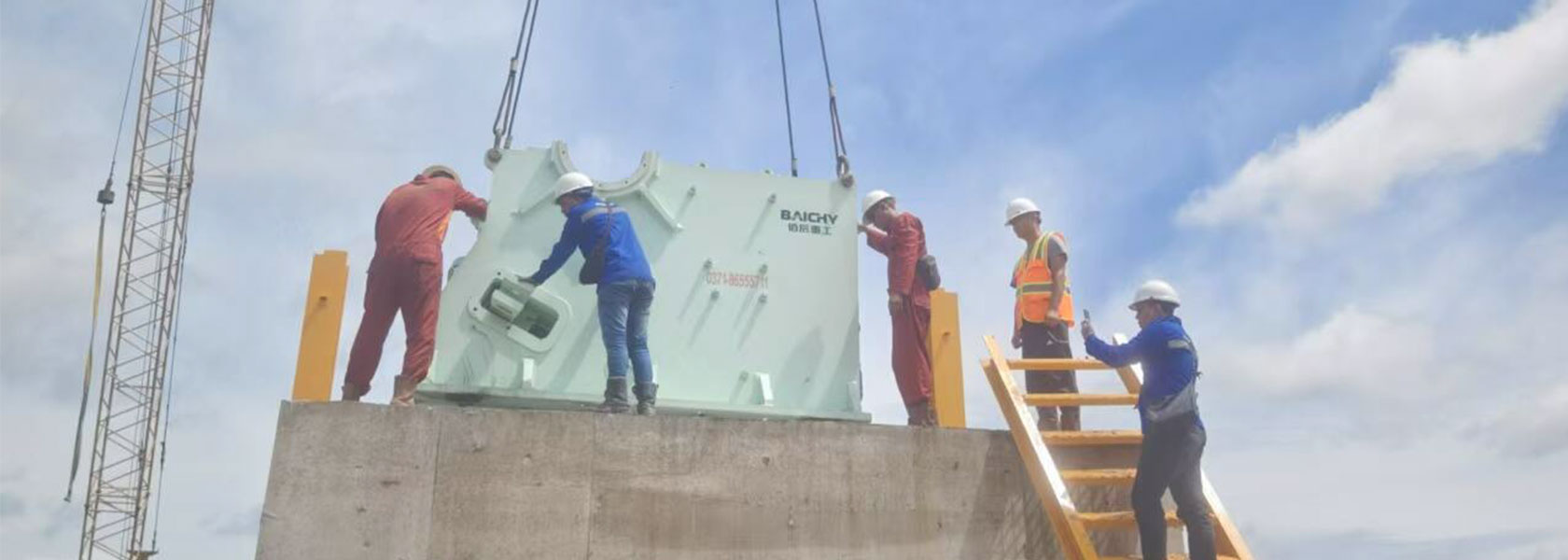
On-site Installation & Training

Our team provides on-site installation and thorough training to ensure safe operation of the crushing plant.

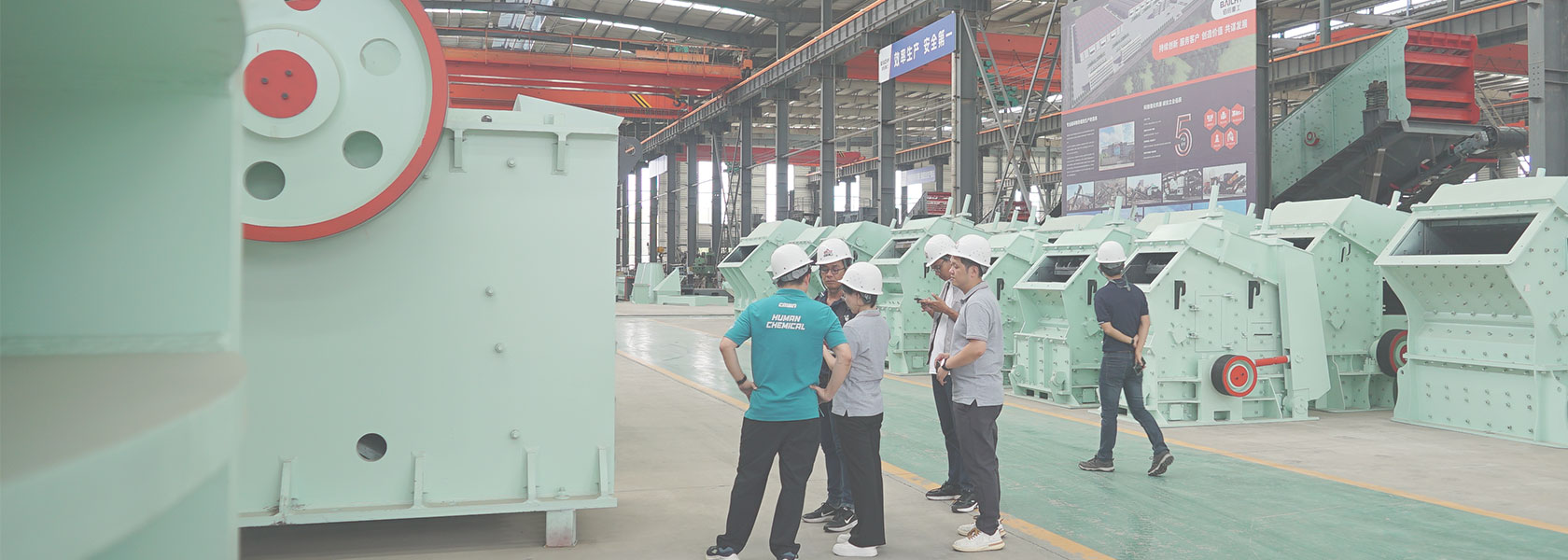
Quality Control & Global Delivery

Rigorous quality checks ensure compliance with standards, and we handle worldwide delivery to your location.

After-Sales Support

Baichy Machinery provides you with spare parts supply, project transformation, investment return analysis, etc.

Crushing Solutions Design
On-site Installation & Training
Quality Control & Global Delivery
After-Sales Support

Frequently Asked Questions (FAQs)

Find answers to the most common questions about Baichy Machinery. If you can’t find what you’re looking for here, please contact us.

1.Why choose jaw + cone for basalt instead of jaw + impact?

Basalt is highly abrasive. Impact crushers deliver excellent shape but wear parts wear out too fast on hard rock. A cone uses compression crushing, offering longer wear life and predictable maintenance. While shape is slightly less cubical than impactor output, it meets most concrete and road-base specs—with significantly lower operating costs.

2.Can the plant produce different sizes without stopping?

Yes. Multi-deck screens use interchangeable mesh panels. Product changes are made by swapping screen media and adjusting the cone's CSS. Hydraulic setpoint changes are quick, minimizing downtime. Exact time depends on how many decks are altered and spare panel availability.

3.What is lead time and installation for a 200 TPH tracked plant?

Manufacturing and shipping vary by schedule and destination. On-site commissioning takes several days—no concrete foundations needed. Baichy provides engineer-guided setup and operator training. Contact us with your location and target date for a specific timeline.

How does dual power work, and why is it good for remote sites?

4. Each unit has an onboard diesel generator and an external power connection. Run on diesel where grid is unavailable, switch to electric when power is stable. This enables immediate deployment off-grid while offering lower fuel costs once site power is ready—a critical safeguard against outages in regions like East Africa.
MAYBE YOU ARE INTERESTED IN