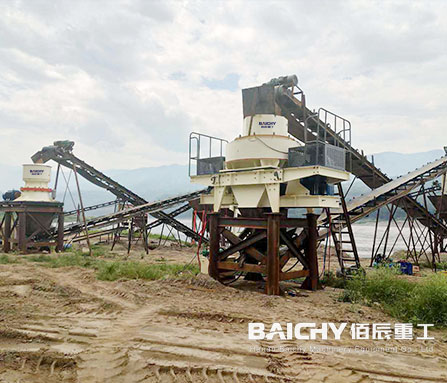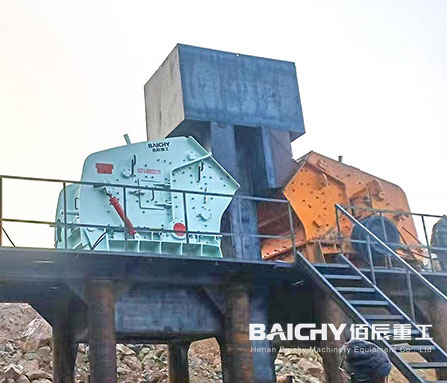
In the world of aggregate processing, we often see a classic blunder: investors obsess over the crusher. They hunt for the biggest jaw crusher, the most powerful cone, believing that the heart of the plant is the only thing that matters. The vibrating screen is often treated as an afterthought—just a simple piece of "support equipment" bolted on at the end. This is a costly mistake. If your screen is lazy, your crusher will work itself to death. In this article, we will dissect the invisible hand of screening efficiency and show you, with real data, how it dictates your entire plant's profitability.

To understand the relationship, you must first understand the enemy of every crushing circuit: Circulating Load. Imagine your crusher is a powerful engine, capable of producing 300 tons per hour. It chews through rocks and spits them onto a screen. If that screen is efficient (say, above 85%), it will quickly separate the finished product from the oversized material. Only the true "too-big" rocks go back to the crusher.
- It fails to pass fine material through the mesh.
- It blinds easily, trapping dust in the holes.
- It lacks the energy to stratify the material bed.
Suddenly, tons of material that are *already* the right size are sent back to the crusher as "false oversize." Your crusher, which should be processing 300 TPH of fresh feed, is now being forced to chew through an extra 150 TPH of material it didn't need to touch.
1. Premature Wear: Your liners, hammers, and belts wear out twice as fast.
2. Energy Waste: You are paying to crush material that is already finished.
3. Capacity Bottleneck: The crusher chokes on the traffic jam, reducing the plant's total output.
The best stone crusher cannot be chosen in a vacuum. It depends entirely on what you ask the screen to do.
- If you use a Cone Crusher (Compression): You are fighting for shape. Cone crushers tend to produce elongated, flaky particles. To fix this, you need a **High-Energy Screen**. You need the aggressive vibration of an elliptical or high-frequency screen to shake those bad-shaped particles loose. Your crusher selection is dependent on the screen's ability to *reject* bad shapes.
- If you use an Impact Crusher (Impact): You are fighting against fines. Impactors create beautiful cubical shapes, but they generate excess dust. You need a **High-Capacity Screen** with a large area to quickly evacuate the product. If the screen is too slow, the finished product stays in the crusher chamber and gets pulverized into worthless dust.

To prove this point, let's look at a real-world scenario. A hard rock quarry (Basalt) was struggling. They had a well-regarded cone crusher in their secondary stage, but the plant was constantly "choked." Output was stuck at 250 tons per hour, well below the design target. The operators assumed the cone crusher was worn out. They planned to purchase a newer, bigger cone crusher. They blamed the crushing machine for the bottleneck.
However, a process audit revealed the truth. The issue wasn't the cone crusher; it was the 2.4m x 6m conventional circular motion screen feeding it.
Current Screen Efficiency is 75% around. Over 60% of the material going back to the cone crusher was actually "fines" or product that should have passed the screen.The cone crusher was struggling with a massive overload of unnecessary material, causing it to "choke" and consume excessive power.
Instead of buying a new crusher, the plant replaced the old screen with a Heavy-Duty High-Efficiency Vibrating Screen. They also optimized the media (mesh) type for their wet material to prevent blinding. Screening Efficiency Jumped From 75% to 90%. The plant's total output increased by 22% (from 250 TPH to over 305 TPH) without changing a single bolt on the cone crusher. Furthermore, the crusher liner life extended significantly due to the reduced wear from fines circulating through the chamber.
1. Define the Product: What is the final size and shape you need?
2. Select the Screen Backwards: Based on that product, what screening area and efficiency is required to separate it cleanly? What screen technology (high-frequency, elliptical, etc.) matches your rock type?
3. Calculate the Torture Test: Only then can you calculate the real circulating load the crusher must handle.
4. Choose the Crusher: Finally, select the crusher that can survive that specific circulating load while producing your target tons.
Never underestimate the screen. Investing in high-efficiency screening allows you to downsize your crushers, reduce wear, and significantly lower your cost per ton. Welcome to contact us for a stone crushing plant audite for free.
Save Time! Get A Detailed Quotation Quickly.