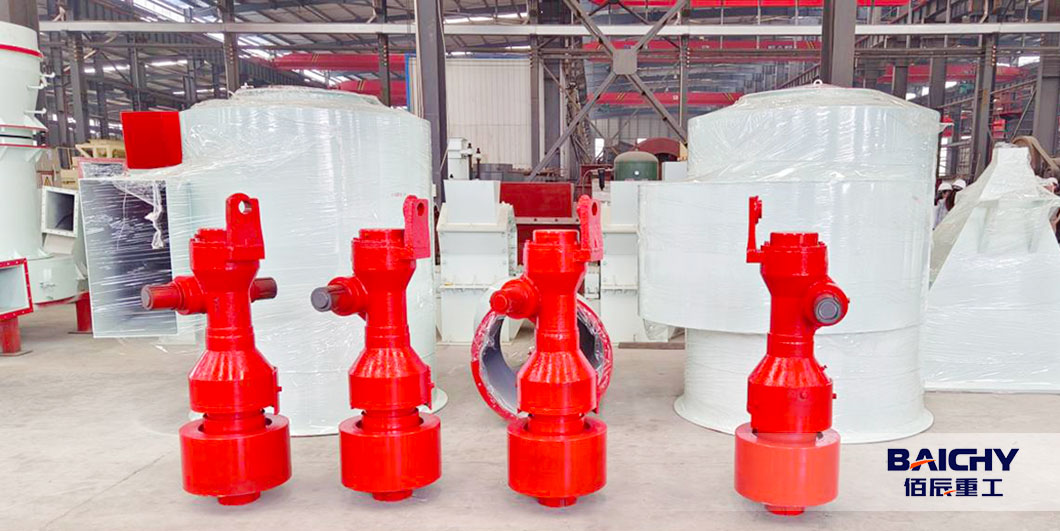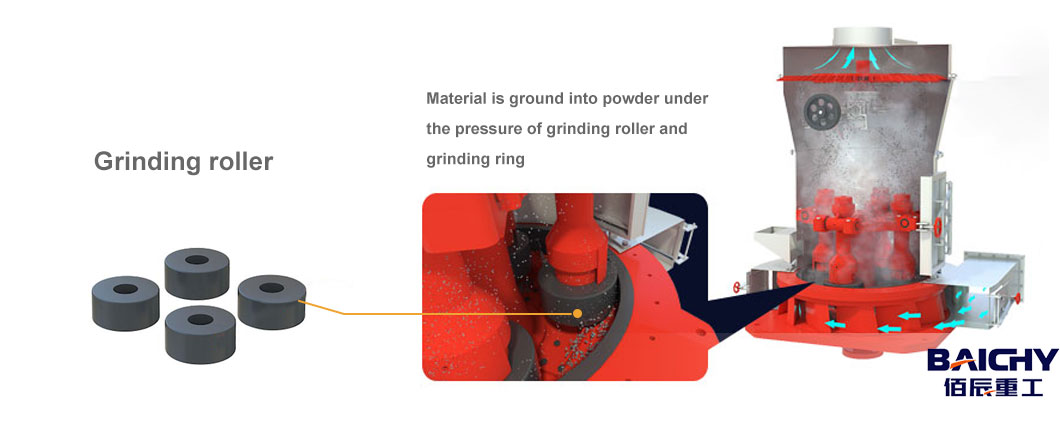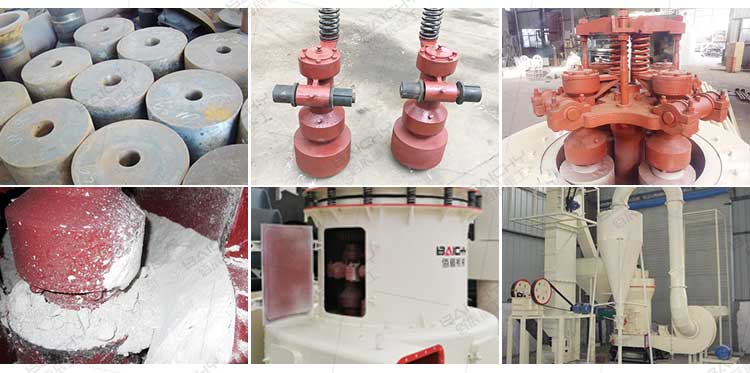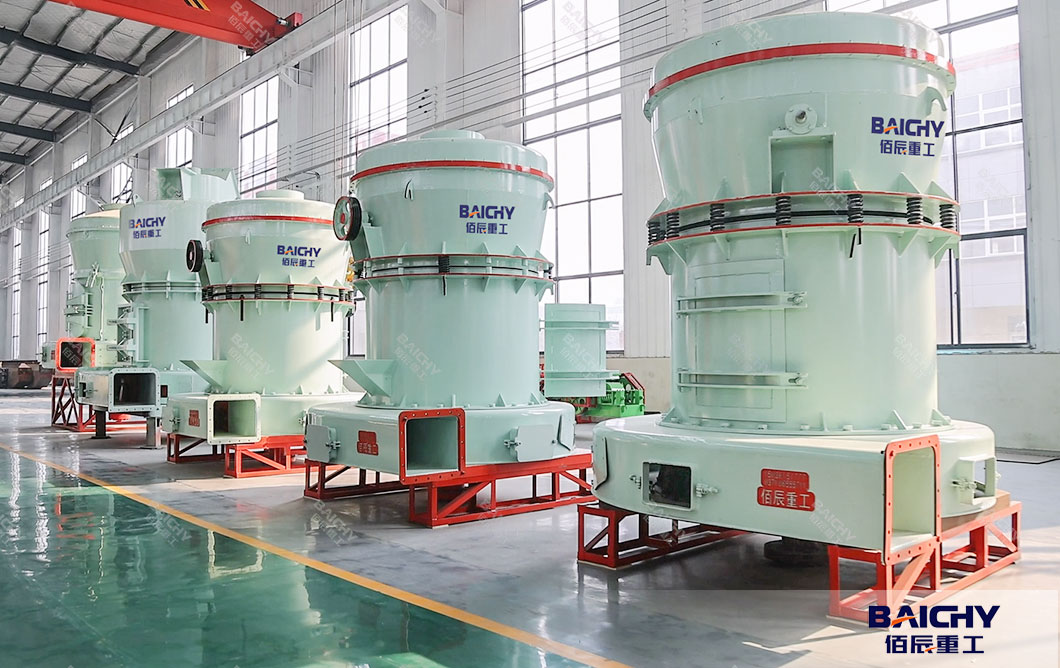
The grinding roller is the core wearable part of a Raymond mill, responsible for crushing and grinding materials between the roller and the grinding ring via centrifugal force. It directly determines the mill’s output, efficiency, and product fineness.

A complete grinding roller assembly includes:
● Roller body: The main grinding component, usually 3–6 rollers per mill.
● Roller shaft: Transmits torque and supports the roller.
● Bearings & seals: High-load bearings with dust-proof seals to prevent powder intrusion.
● Spring/hydraulic support: Provides compression force for stable grinding.
Modern designs adopt a "roller rotates, shaft stationary" structure for better sealing and longer bearing life.
Driven by the main rotating shaft, the grinding roller swings outward under strong centrifugal force and presses firmly against the fixed grinding ring. The material is scooped evenly into the gap between the roller and ring, then continuously squeezed, rolled and ground into fine powder. Qualified fine powder is blown away and collected, while coarse particles fall back for repeated grinding until reaching the required fineness.

Common high-strength, wear-resistant materials:
● Mn13 (High Manganese Steel): Best for hard materials (e.g., granite, basalt); high impact resistance but higher cost.
● 65Mn (Manganese Steel): Balanced wear resistance and cost; suitable for medium-hard minerals.
● Alloy Steel: For soft materials (e.g., limestone, talc); cost-effective with moderate durability.
| Model | Roller Qty | Diameter (mm) | Height (mm) |
| 3R2715 | 3 | 270 | 150 |
| 4R3216 | 4 | 320 | 160 |
| 5R4121 | 5 | 410 | 210 |
● High Efficiency: Centrifugal compression ensures strong grinding force; uniform particle size (30–325 mesh).
● Durability: Wear-resistant materials extend service life; easy to replace worn parts.
● Stability: Shock-absorbing design reduces vibration; sealed bearings minimize maintenance.
● Cost-Effective: Long replacement cycles (6–12 months); low downtime.

● Ideal for non-flammable/non-explosive materials with Mohs hardness ≤7 and humidity ≤6%:
● Minerals: Limestone, calcite, barite, dolomite, feldspar.
● Chemicals: Gypsum, kaolin, bentonite, phosphate rock.
● Building materials: Glass, ceramics, refractory materials.
● Monitor wear: Regularly check the wear of the roller sleeve and grinding ring. A drop in grinding pressure or output usually indicates wear.
● Lubrication: Use high-temperature grease for bearings; avoid dust contamination.
● Seal Protection: Replace damaged seals promptly to prevent powder from entering bearings
● Replace worn shovel blades: When the shovel blade is worn, it cannot feed material effectively, greatly reducing grinding efficiency. Replace it in time.
● Adjust spring pressure (if applicable): For high-pressure mills, you can compensate for roller wear by adjusting the spring pressure to maintain stable output.
Save Time! Get A Detailed Quotation Quickly.